

Deep Geological Disposal
How can radioactive waste be isolated over geological timescales?
Explore the multi-barrier technology and the development of Finland's ONKALO repository.
Why use deep geological disposal?
Some radioactive waste remains hazardous for very long periods. Deep geological disposal (DGD) aims to safely store this waste deep underground, using carefully chosen rock formations to keep it isolated from people and the environment for a very long time.

Multi-Barrier System
The multi-barrier principle means that the safety of the repository does not rely on just one protective layer. Instead, it consists of several barriers that work together to contain the radioactive waste and reduce the risk of radionuclides escaping into the surrounding environment.

Case Study: ONKALO
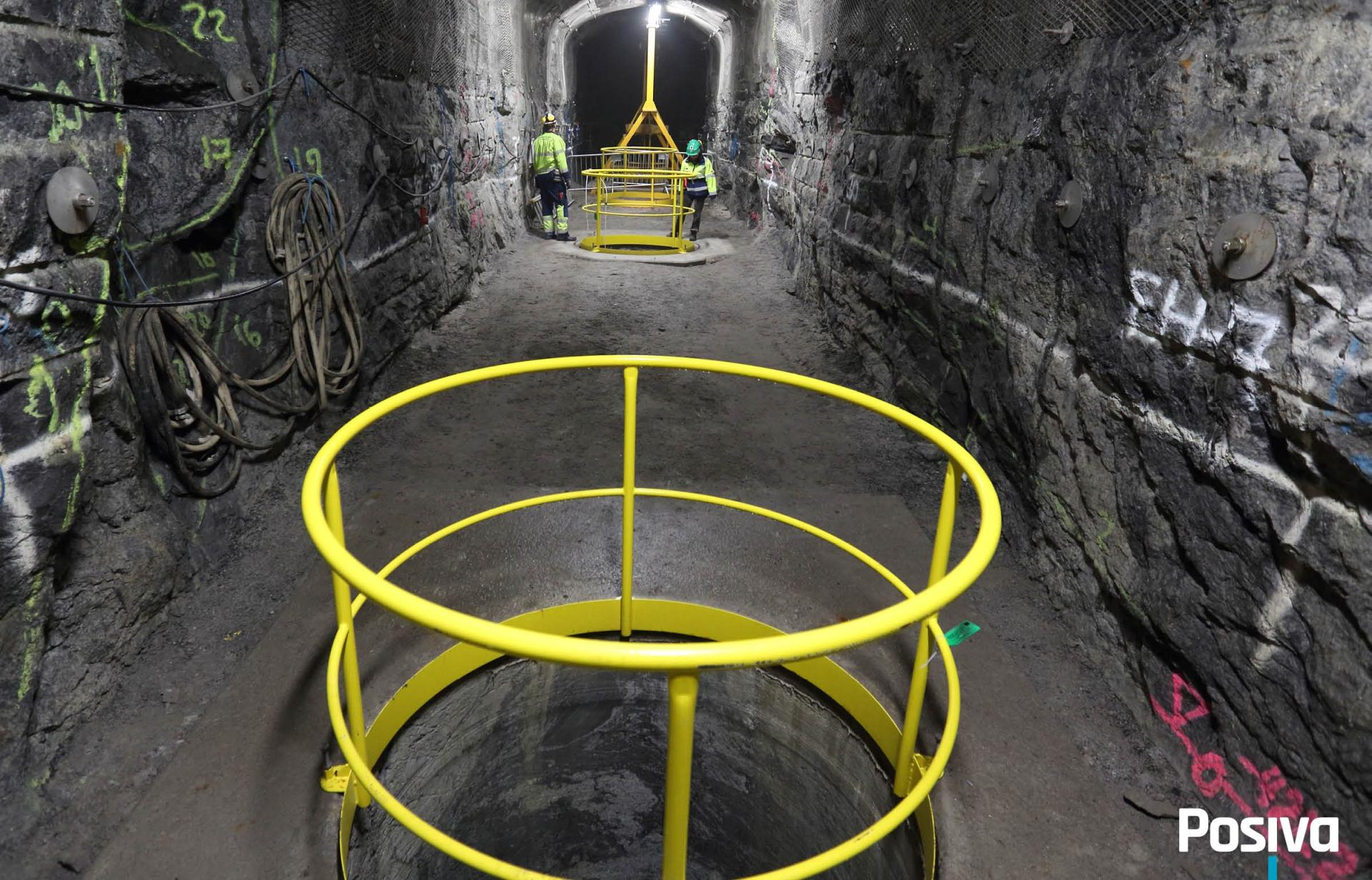
The facility at Olkiluoto is one of the leading examples of deep geological disposal. It is designed to safely store spent nuclear fuel deep underground, using an encapsulation plant above ground and a network of underground tunnels built into the surrounding bedrock.

Geological Consideration
The waste needs to remain safely stored for a very long time, therefore, it is important to consider not only the conditions today but also how the surrounding geology could change in the future.

Long-term safety
Monitoring and research help make sure the site and facility are safe throughout the investigation, construction and operation stages. However, once the repository is closed, its long-term safety mainly depends on how well the different barriers work together and how stable the surrounding rock remains.

Why does public perception matter?
At the end of the day, the technology can be as safe and well-designed as possible, but it is people who have the biggest say in whether it is accepted. Building public trust, being open about decisions and involving local communities is therefore just as important as the technical side. Also, there needs to be clear ethical and legal regulations in place so that decisions are made responsibly and fairly, with everyone's interests considered. After all, people need to feel heard, respected and confident in the decisions being made.
Further Suggested Research
A 2022 study involving around 5,000 people in Germany showed that trust played a big role in how people felt about the process of choosing a disposal site. However, this did not necessarily mean they would also support the final location or the facility itself. It just shows that people may support the selection process but still have concerns about where the site is built and having it near their communities.
Create Your Own Website With Webador